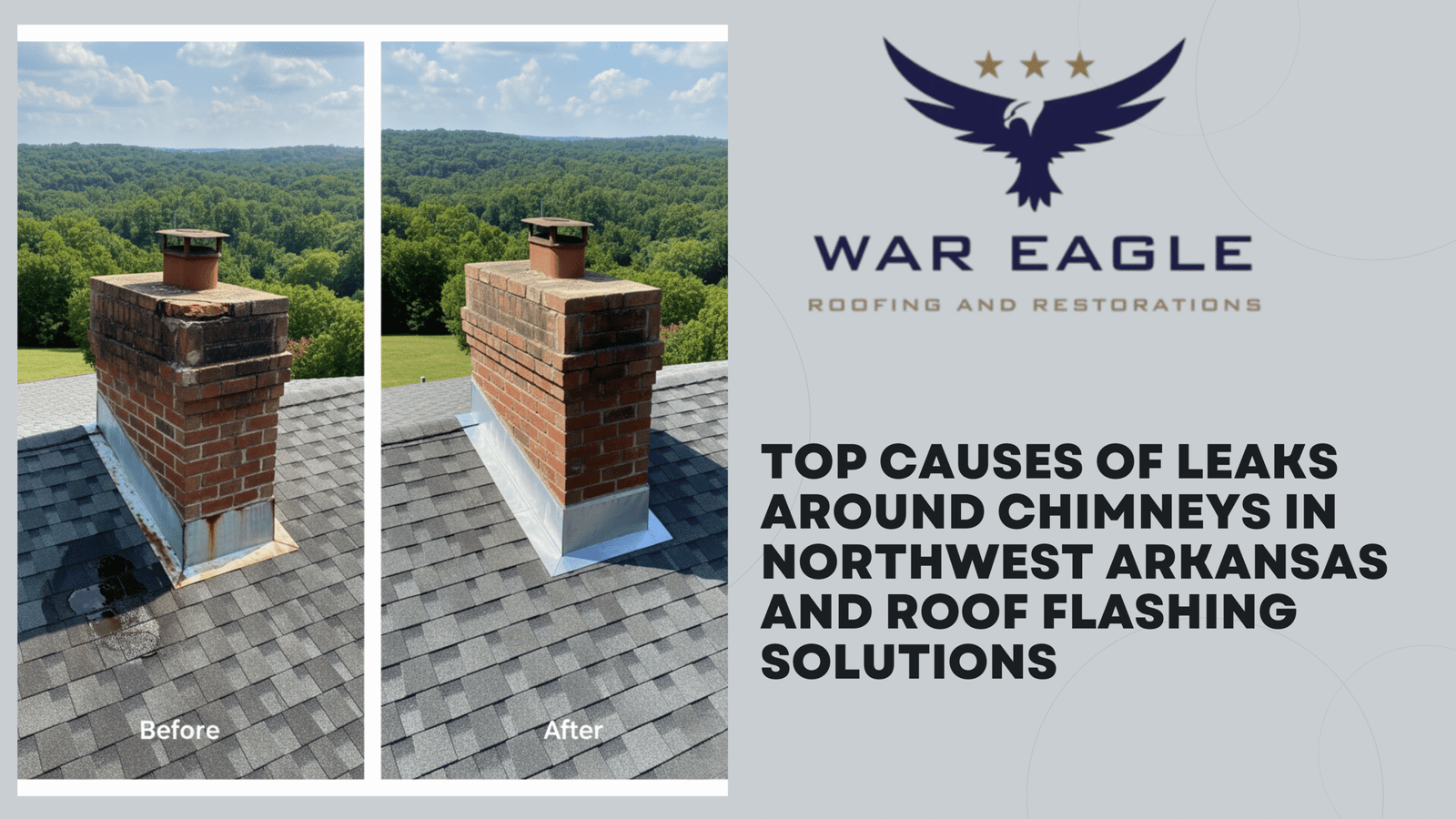

Roof Flashing Repairs may not always be the first thing Northwest Arkansas homeowners think about when it comes to roof maintenance, but it plays a vital role in protecting your home from water intrusion. Flashing seals vulnerable areas around chimneys, skylights, vents, and valleys where leaks are most likely to occur.
When flashing gets damaged, it can lead to roof leaks, wood rot, mold growth, and costly repairs. Many homeowners try to handle flashing repairs themselves to save money, but DIY roof flashing repairs often lead to bigger problems if done incorrectly. Let’s explore the most common mistakes people make, and how you can avoid them.
Why DIY Roof Flashing Repairs Can Be Risky
Roof flashing repairs require precision, the right materials, and experience. While DIY videos may make the process look simple, even small errors can leave your home vulnerable to leaks, especially with Northwest Arkansas’s mix of heavy rains, hot summers, and occasional winter ice.
Common Mistakes in DIY Roof Flashing Repairs
1. Using the Wrong Materials
Many homeowners make the mistake of using thin sheet metal, leftover shingles, or even caulk alone instead of proper flashing materials. In Northwest Arkansas, where seasonal weather can be harsh, only durable materials like galvanized steel, aluminum, or copper provide long-term protection.
How to Avoid It: Always use roofing-grade flashing designed to withstand local climate conditions.
2. Improper Sealing
Simply applying caulk or roofing cement without overlapping and sealing flashing correctly is one of the biggest DIY mistakes. Over time, sealants crack and wear down, leaving gaps for water to enter.
How to Avoid It: Ensure proper overlap between flashing and roofing materials, and use professional-grade sealants sparingly as reinforcement—not as the main barrier.
3. Poor Nail Placement
Nailing flashing incorrectly (too close to edges or directly into vulnerable areas) can puncture the protective barrier. Worse, exposed nails can rust and cause leaks.
How to Avoid It: Flashing should be secured strategically under shingles or siding to remain watertight, with nails hidden and sealed.
4. Over-Reliance on Caulk Alone
Caulk is not a long-term solution. Many DIYers think applying a thick bead of caulk over gaps will fix flashing issues, but caulk alone degrades quickly under Arkansas’s sun and heavy rain.
How to Avoid It: Treat caulk as supplemental, not the main fix. Properly cut, layered, and installed flashing is the foundation of a lasting repair.
5. Ignoring Roof Movement
Homes naturally expand and contract with temperature changes. Flashing must be installed to account for this movement. DIY repairs that don’t allow for flexibility can crack and pull away, leading to leaks.
How to Avoid It: Use the correct installation techniques that accommodate natural roof shifting and settling.
6. Failing to Address the Root Problem
Sometimes flashing damage is a symptom of larger roofing issues like missing shingles, poor gutter drainage, or wood rot. DIYers often replace only the flashing without solving the underlying cause.
How to Avoid It: Inspect the entire roofing system or hire a professional who can identify the true source of the leak.
7. Safety Risks
Roof work is dangerous without the right training and safety equipment. Many DIY flashing repairs go wrong because homeowners rush, work in unsafe conditions, or damage shingles while climbing around.
How to Avoid It: If you’re not comfortable with roof work, it’s safer and often cheaper in the long run to hire a licensed roofing professional in Northwest Arkansas.

Why Professional Roof Flashing Repairs Are Worth It
Hiring a local roofing contractor means:
- Proper materials are used that last in Arkansas’s climate.
- Repairs are installed with professional precision.
- Leaks are addressed at the source, not just patched temporarily.
- Work is backed by warranties for peace of mind.
- You avoid the dangers of climbing on a roof.
Ultimately, while DIY may seem cost-effective upfront, mistakes can lead to expensive water damage and premature roof replacement.
Final Thoughts
Roof flashing may seem like a small detail, but it’s one of the most critical components of a leak-free home. Northwest Arkansas homeowners often run into problems when attempting DIY roof flashing repairs, from using the wrong materials to over-relying on caulk. By understanding these common mistakes and opting for professional help when needed, you’ll protect your roof and your home for the long term.
Call to Action
Don’t let a small flashing issue turn into a major roof repair. If you’re noticing leaks, loose flashing, or signs of water damage, contact our Northwest Arkansas roofing specialists today. We’ll provide a thorough inspection, expert repairs, and long-lasting solutions to keep your home protected.